The dating app people say they want
For most of the 20th century, you met the person you'd marry through someone you knew. A friend, your family, a coworker, your church. By the time you were introduced, someone had already vouched for you.
Apps replaced all of that. Online is now the most common way couples meet, and according to Stanford's survey, almost 9 in 10 of those couples were strangers before.
Attraction always mattered. But context used to decide who you met. Apps took the context away and replaced it with a few photos.
I never wanted to build a dating app. I knew looks mattered, and I doubted an app could ever offer the context you get from meeting in person. Then I started having long voice conversations with ChatGPT and realized it could get to know someone the way a good friend does. Maybe it could bring the context back.
So I built Soulmate, a dating app where you talk to an AI matchmaker. You tell it about your life and who you're looking for, and it introduces you to people it thinks you're compatible with. I hoped context could override attraction, at least a little, but the data says I've mostly been wrong.
So today I'm launching a second experiment. It's called 66, and it flips Soulmate on its head. It's purely about money, status, and looks. Soulmate is built for who you are. 66 is built for what you have to offer.
Soulmate is continuing. They're a family of two experiments, both trying to get at the truth of what leads to great matches.
| Soulmate | 66 | |
|---|---|---|
| The bet | Who you are | What you have to offer |
| How you get in | Talk to an AI matchmaker | Apply through money, status, or looks |
| How you meet | Introductions, mainly on compatibility | A curated community, no matching |
| Built on | What people say they want | What the data says they act on |
What Soulmate taught me
People really open up to their AI matchmakers. Members have had more than 8,000 voice conversations, totaling over 400 hours. In one month, 58% of members who talked to the matchmaker came back for another call. Women are now nearly half of our New York members, which is rare for a dating app, where men usually outnumber women.
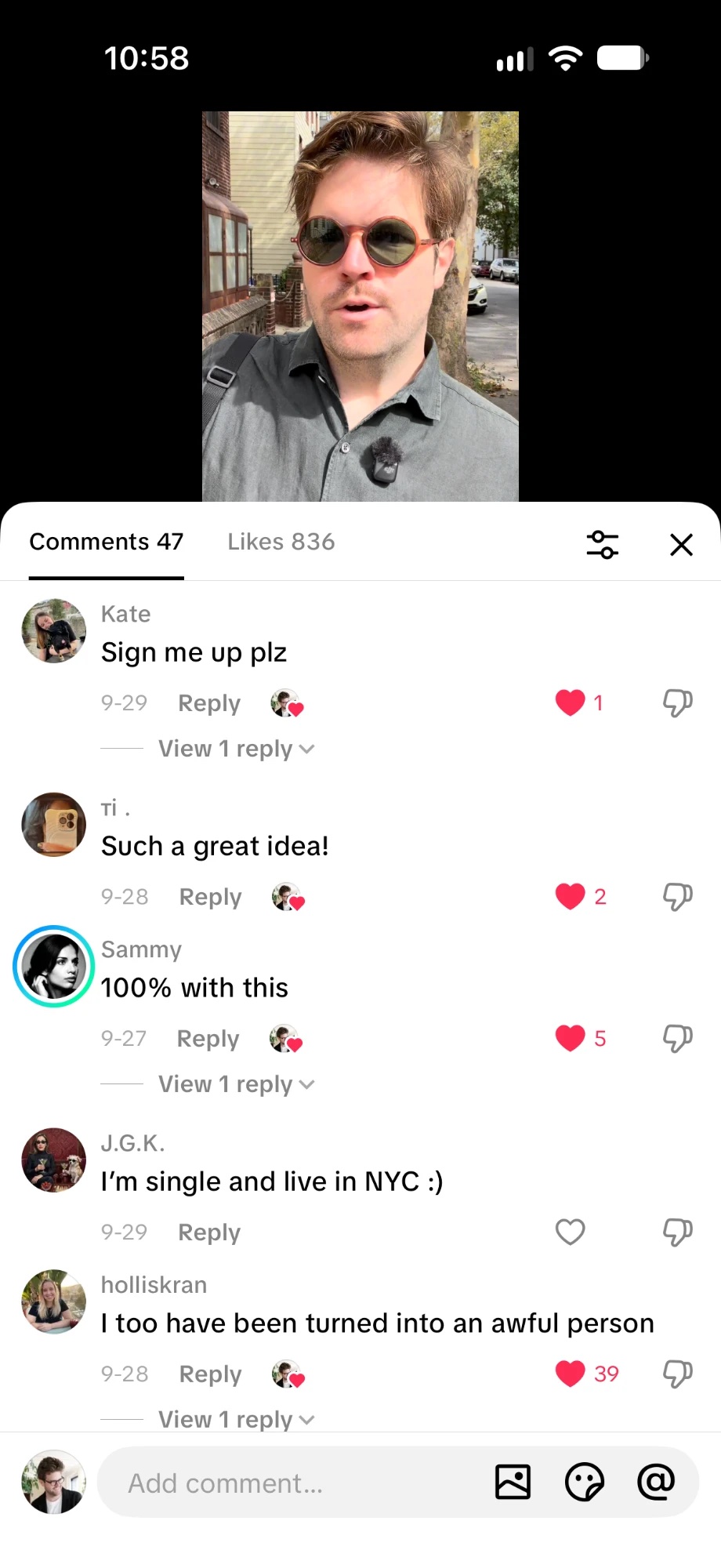
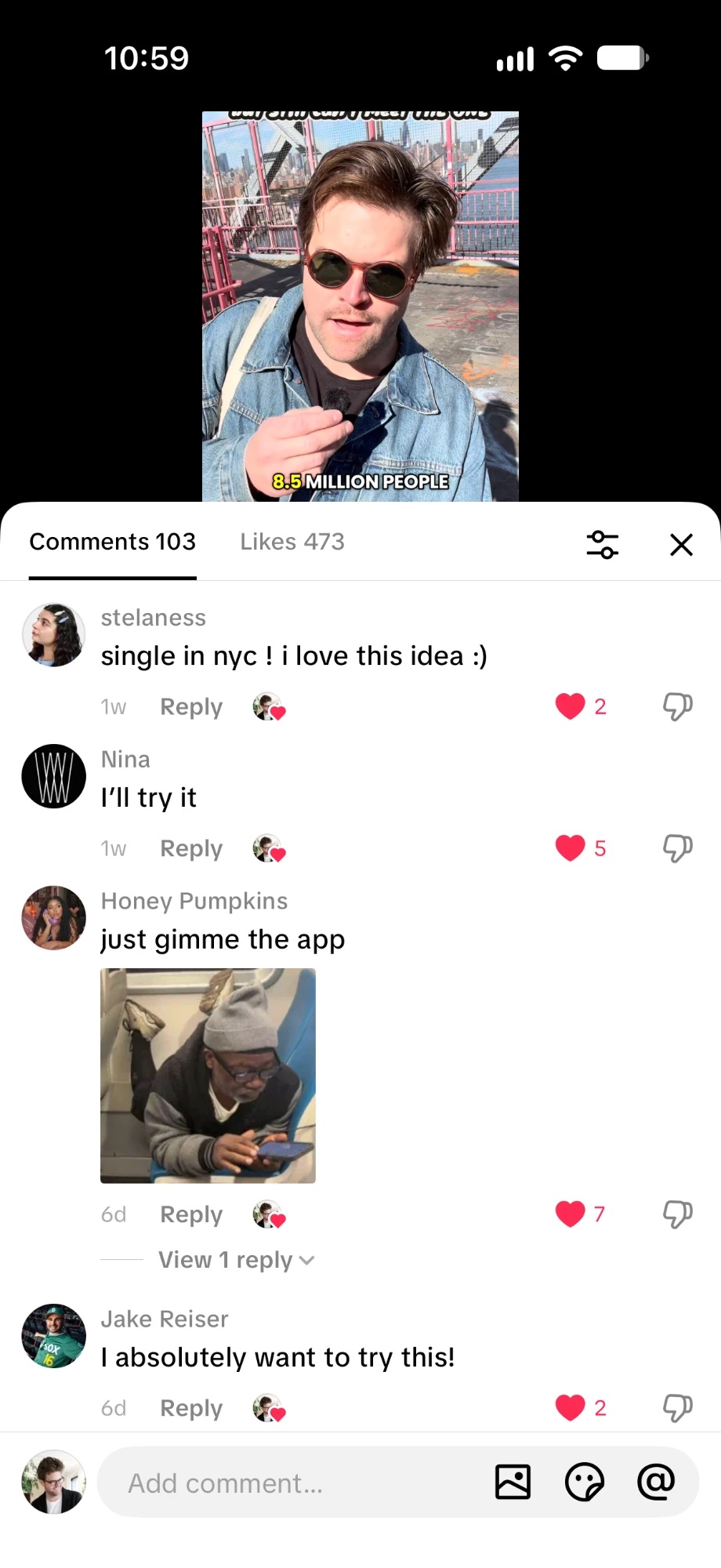
When I post about Soulmate on TikTok, the comments are overwhelmingly positive, especially from women. People are craving something totally new in dating.
The concept resonates. Then we get to the part where two people have to say yes.
The matchmaker introduces two members. It's only a match if both say yes. Here's what happens to every 1,000 introductions.
About a quarter of intros get at least one yes. The yeses just rarely line up, but when they do, about 7 in 10 turn into a real conversation.
When members tell the matchmaker what they want in a partner, looks come up for fewer than a third of them, behind shared interests, family, and communication. Height comes up for just 2%.
Then they're shown an actual person, and it's an entirely different story. What people say they want (their stated preferences) and what they act on (their revealed preferences) turn out to be very different. Here's why they pass on an intro.
Members could pick more than one, so these add up to more than 100%.
Attraction isn't near the top of what people say they want, but it's the main reason they say no, for women and men alike.
Here's why they say yes.
Members could pick more than one, so these add up to more than 100%.
Attraction isn't enough to say yes, but its absence is enough to say no. Women lean hardest on non-physical attributes: 59% of their yeses mention having a lot in common, against 39% of men's.
So here's where I've landed. Physical attraction decides who says yes. I think context decides who stays, but I can't prove it yet. Stanford's researchers found that how couples met doesn't predict how long they last. Still, I'd bet on having someone vouch for both parties. That's the role Soulmate's matchmaker plays.
OkCupid tried something like this in 2013. They hid every photo on the site for seven hours. Fewer people messaged, but more of them got replies. When the photos came back, a lot of those conversations just died. And on its blind-date app, people had a good time regardless of how attractive their date was. As OkCupid cofounder Christian Rudder put it, people are "exactly as shallow as their technology allows them to be."
Why 66
A dating app that matches based on compatibility will require a cultural shift. Today's apps have taught people to hold out for someone really attractive, and right now, attraction still overrides compatibility. To compete in today's app landscape, I think you have to lead with what people want first: what someone has to offer, not what you have in common.
That's 66. You apply through money, status, or looks. The name comes from the old dating-app ask: six feet, six figures. It's basically the wish list from that viral "man in finance" TikTok.
66 was my first idea, long before Soulmate. I envisioned it as a dating app where you log in with your bank account. Totally on the nose, but also totally honest. I always knew the more superficial attributes mattered most. I just didn't want to admit it, and building that app felt too cynical. When I wrote about building Soulmate last December, I even called apps that charge extra to see the "good" people horrific. I still think that. But 66 isn't pretending to be for everyone. It's a club, and you know who gets in before you apply.
Paul Graham's advice to founders is to make something people want. Soulmate is built on what people say they want. 66 is built on what they've shown they want. The 66 waitlist is live in NYC, and it's open to anyone who qualifies. So if you make over $250k a year, have over 50k followers, or are one of the most attractive people on earth, apply to 66. And if you're not, we'd love to learn more about your personality on Soulmate.